Culture

The Even Greater Outdoors

Few demographics are more environmentally conscious than Latinos. I mean, we are more likely to lead green lifestyles, buy green products and support efforts to fight climate change. And on a personal note, let me remind you that I was once a Boy Scout, and I can still start a fire without using matches… probably.

Anyway, the point is that we really love nature. So maybe it’s not a big surprise that Latinos are also taking the lead in creating new national landmarks and preserving natural spaces.

When President Obama declared part of the San Gabriel Mountains in Southern California to be a national monument, it was with the hearty support of Latinos. Polls showed that almost 90% of local Hispanics supported the San Gabriel Mountains designation. You can’t get 90% of Hispanics to agree that salsa is better than ketchup. But when it comes to nature, we’re overwhelming in our agreement.

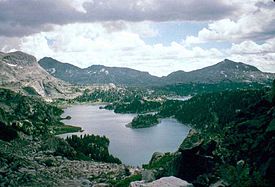
Cook_Lake_Bridger_Wilderness

Yes, there are even organizations like Latinos Outdoors, Green Latinos, and HECHO (Hispanics Enjoying Camping, Hunting and the Outdoors), and they have worked for the protection of areas like the San Gabriel Mountains and the Rio Grande del Norte National Monument in New Mexico.

So why do Hispanics show all the love for mountains and streams and lakes and trees and such? Well, one theory is that our legendary focus on family drives our desire to maintain the environment for future generations. Another is that because we tend to be recent immigrants, or the offspring of recent immigrants, we have more of a connection to the pristine environs of Latin America.

That certainly makes sense. But I also think it’s because we’re less likely to be right-wing industrial polluters who only care about the bottom line and think climate change is a left-wing conspiracy.

But maybe that’s just me.


Name of the Game

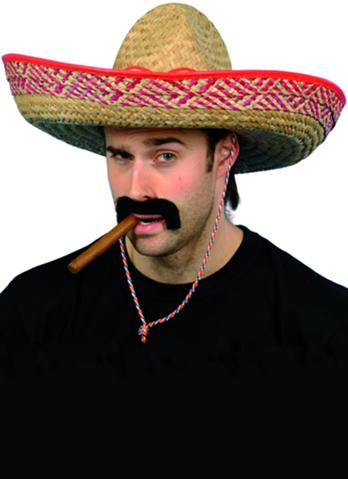
I have a traditionally Hispanic first name. Of course, it’s also traditionally European, which has its cultural advantages. Yes, having a Latino first name can be an impediment, and if you don’t believe me, just ask this guy.

It wasn’t that long ago when Latino parents would name their children John and Mary rather than Jose and Maria. It was an attempt to fit in with mainstream America.

But as we know, contemporary Hispanic parents are less likely to be cowed, and they frequently insist on calling their kids Juan and Maribel and so on. The twist, however, is that white parents are now increasingly choosing traditionally Latino names for their children.

I bet you didn’t see that one coming.

exclamation-246x196


A survey by a baby-naming website found that many white parents are eschewing Dylan in favor of Diego, and skipping Madison for Esmeralda.

The reasons for the decision vary. Some white parents believe that if their children have Latino names, they will better fit in with their future Hispanic buddies and their multicultural peers. This is strange logic, as a Latino is unlikely to say, “I’m only friends with Ramon Anderson because of his first name.” But it’s a harmless enough reason, I guess.

Yet other white parents simply like the sound of Latino names. Well, that’s a matter of personal taste, of course. When it came time for my wife and I to name our son, I have to admit that very few Latino male names made the first cut, based purely on aesthetics. We ultimately went with something Hebrew that we both loved.

The final reason that white parents give for naming their kids Guillermo instead of William is that most hoary and bizarre of myths: That Latinos receive unspecified “benefits,” and they want their kids to be perceived as Hispanic.

If the cold, hard facts of how difficult Latinos have it in this country aren’t enough to destroy the idea that Hispanics get all the good scholarships and great jobs — stealing them from better-qualified white people, no less — than I don’t know what to tell you. This idea is a pernicious lie that makes white people who have been stiffed by the system feel better about themselves and their rich overlords. And apparently, it is strong enough to persuade some people to deny their cultural heritage, which is just sad.

But let’s say that the mere presence of Latino name is enough to get your kid into an Ivy League school today (which it isn’t). Doesn’t it seem obvious that twenty years from now, when universities are swamped with Hispanics both real and fake, putting the name Esteban on the application isn’t going to matter at all?

Damn, maybe those parents should have went with their first choice (Mason and/or Liam).


Kind of Like a Doogie Howser Episode

The state of Latino health is grim — grim, grim, grim. We have higher rates of diabetes, obesity, hypertension, you name it.

Hispanics are also doing pretty sucky when it comes to education and employment. If only there was a way to combine all these issues…

Well, a California job-training program is trying to peg multiple issues with just one stone. Medical Pathways trains high schoolers in the Latino community for health care occupations. The goal is to provide real-world experience to disadvantaged kids while improving the overall health of the community.

The program guides students — primarily Hispanic — through four years of medically focused science classes, such as anatomy and physiology. The students run community health fairs, where visitors — again, primarily Hispanic — get information about different health issues and receive free services, such as getting weighed or having their blood pressure taken.

blood-pressure-340x289
Many students put in enough hours for a medical assistant certificate, which gives them a head-start on snagging better-paying health care jobs. Other students are inspired to become doctors or nurses.

No, it’s not an ideal solution. But it’s certainly creative and effective. And that’s a start.


Pissed off All the Time

I don’t make New Year’s resolutions. Still, it’s always a good idea to reflect, and to pinpoint areas for personal growth and good stuff like that. So in 2015, I will try to be more patient and less quick to anger.

Of course, we Latinos are known for our fiery tempers. We’re also known for being excellent lovers, great artists, and unemployed… well, some stereotypes are more positive than others.

The point is that I know my temper is not the best. But it apparently pales in comparison to some of my fellow Latinos. And that is part of a larger problem.
You see, ethnic minorities in general are often portrayed as overly emotional and aggressive. Just look at the stereotype of the angry black woman.

Now, if we are angrier, it may be because we have more to be hostile about. Just look at the economic data, or the quality-of-life statistics, or, I don’t know, the trend of us getting shot more often.

But there’s something more going on here, besides justified anger. It is in the best interest of the establishment to portray minorities as angry, unreasonable, and illogical. After all, it is a lot easier to dismiss someone’s grievances if that person is always flying into rages over every little thing, or if she/he perceives every minor slight as a major injustice.

anger green

And being dismissive is a most effective tactic. Think of how many issues have been erased with the offhand remark that it was all just so much misplaced fury and political correctness.

By the way, I’ve written before, nothing has been PC since the 1990s, and this lazy rebuttal no longer means anything. I mean, some people believe that being against torture is PC — and how crazy is that?

But I digress. The point is that whenever Latinos, or any minority, complain about an injustice or societal problem, there will be plenty of people who offer a smirk and the calm, apparently reasonable explanation that we are just being angry because we’re, you know, prone to volatility and irrational behavior.
Earlier this year, when President Obama declined to address immigration reform before the midterms, we heard how many Latinos were in an eye-popping rage. It was an easy concept to Google.

Or to present a less politically charged issue, consider the case of Banditos, a San Francisco restaurant. When Hispanic leaders pointed out — calmly and respectfully no less — that the name was a negative stereotype, the owners agreed and changed the name.

But message boards decried the apparent appeasement to angry Latinos, and many people vowed never to eat there unless it changed its name back. The irony, of course, is that the angriest, most threatening people in the whole situation were the ones screaming that Latinos are unreasonable and demanding. But the label will not stick to them like it does to us.

So what can we do to avoid appearing perpetually hostile?

Well, if I knew that, I wouldn’t be so annoyed nonstop.


Slaves

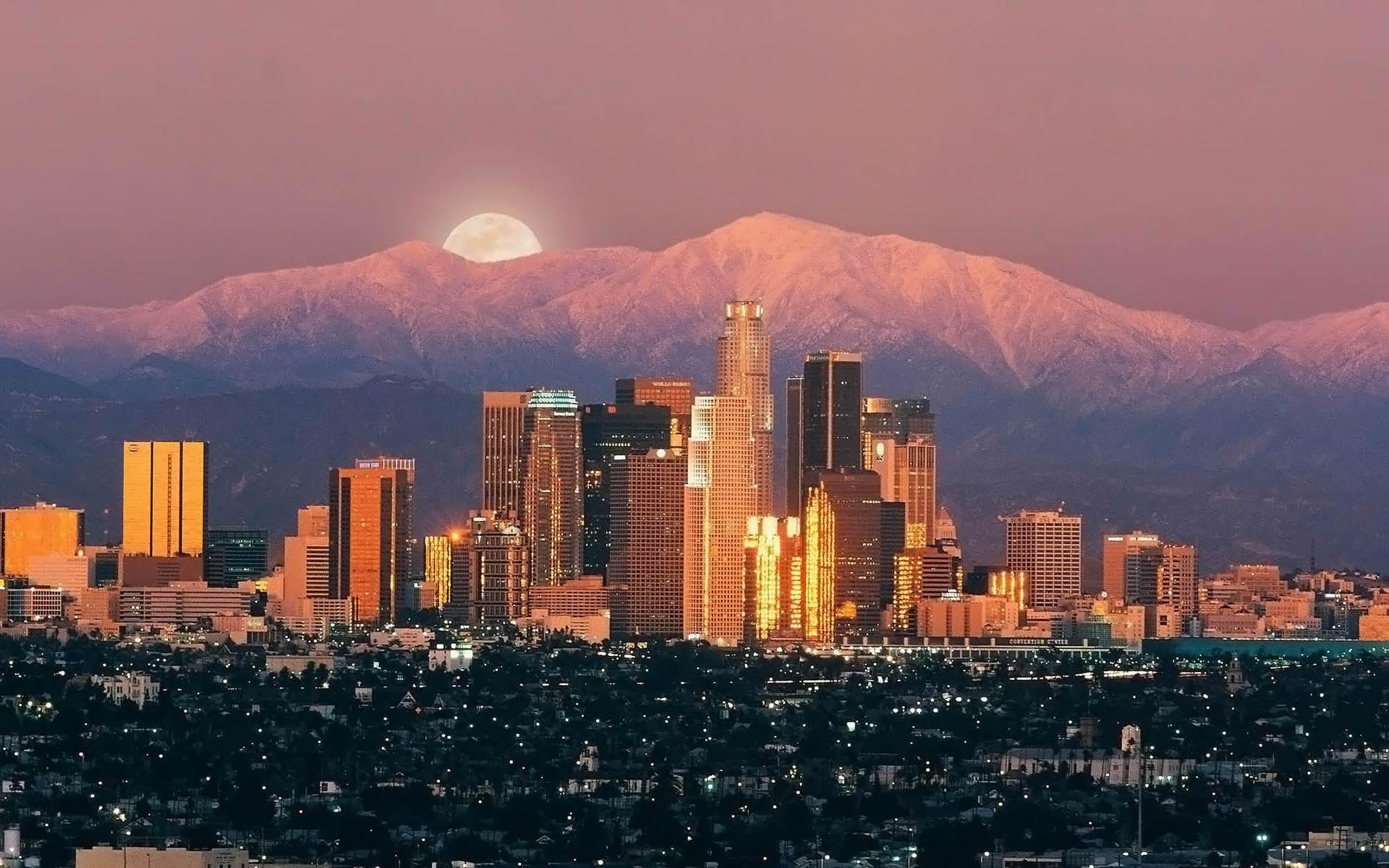
I’ve lived in Los Angeles, on and off, for about ten years now. I love it here, and I believe it’s one of the greatest cities in the world.

la moon


But like any metro, it has its problems. Many of those can be summed up in the work “traffic,” but of course there are deeper issues as well.

The always-insightful Chris Rock recently addressed one of those problems when he wrote the following:

“There’s a slave state in LA. There’s this acceptance that Mexicans are going to take care of white people in LA that doesn’t exist anywhere else.”

I can vouch for the fact that multitudes of Hispanics (not just Mexicans) are constantly serving white people in LA. This issue crisscrosses some of our favorite topics — race, ethnicity, class, wage disparity, egalitarianism, free will, and so on — and it will not be resolved anytime soon.

But while Rock’s slave quote got a lot of attention, I thought his more salient point was the following:

“You’re telling me no Mexicans are qualified to do anything at a studio? Really? Nothing but mop up? What are the odds that that’s true? There’s probably a Mexican David Geffen mopping up for somebody’s company right now. The odds are that there’s probably a Mexican who’s that smart who’s never going to be given a shot.”

Yes, it’s not just that Latinos are a perpetual underclass in LA (and indeed, in much of America). It is that even the best and brightest do not have the same resources and access that most white people — even the no-talents and the mediocre — take for granted.

In essence, it’s tough to stop being a slave. But as history has shown us, not only can it be done, but it will be accomplished, eventually.


All Issues Mailed Flat

When I was a kid, I had a tower (and I mean that literally) of my favorite comic books. They leaned against the wall and were braced on either side by sturdy objects — milk crates or chairs or something like that. I seem to recall that the tower reached the ceiling, but I’m sure that’s not possible. It was most likely a few feet high and just seemed imposing to a six-year-old.

In any case, the tower is long gone, but I still have a few of those prized comics, issues of the X-Men and Conan the Barbarian and House of Secrets and the like. Like a lot of Gen Xers, I used comic books as a gateway drug to novels.

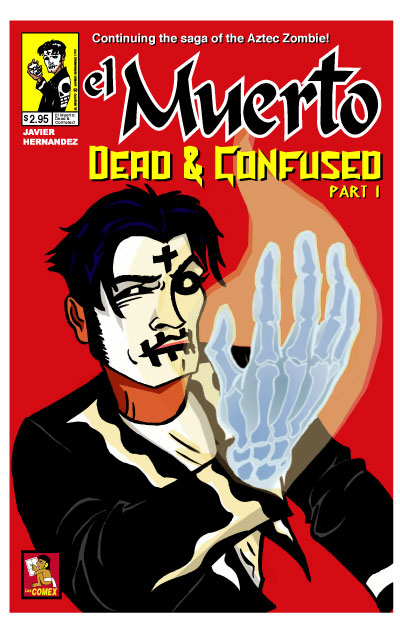
But even back in the day, when my love for comic books could not be quantified, I noticed something. It’s the same thing that Javier Hernandez, creator of the El Muerto comic book, noticed.

Hernandez says, “There is one thing I didn’t see in those books. I didn’t see me in there. I didn’t see us, Latinos.”

Nope, there were very few Hispanic characters or stories presented. However, a new generation of writers is looking to Latino culture for inspiration. It’s a full-fledged trend, illustrated by the fact that the Latino Comics Expo was held recently to spotlight Hispanic creators like Hernandez. His creation is a Hispanic hero based on a combination of Aztec mythology and Mexican folklore. I mean, how cool is that?

el muerto

Now, as we all know, comic books often feature thematic elements that appeal to teenagers and/or geeky middle-aged men. These include stories of heroes like the Jonah Hex and Spider-Man, who were outsiders to mainstream culture. It’s not much a stretch to say that Latinos have long appreciated the theme of being a misunderstood minority.

And now that metaphorical subtext is a little more concrete. Comic books from Hispanic authors range from traditional superhero formats to experimental stories to reality-based tales, such as the life of a Latino punk fan growing up in California.

Personally, I’m waiting for a Hispanic version of Wolverine. Now that would be something.


Flags of Our Fathers and Mothers

I’ve been thinking a lot lately about ethnic authenticity and the struggle for self-identity in a post-multicultural world.

Actually, that not’s true. In reality, I’m more apt to be thinking about taking my car in for a tune-up, or the odds of the Packers winning their division, or what Kate Winslet is doing right now (probably something sexy).

But when stray thoughts about ethnic authenticity and… well, the rest of it, actually do enter my mind, I think about a recent news story that caught my eye.

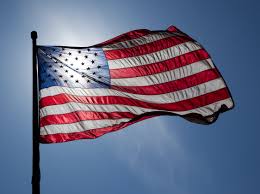
Here in California, we had a brouhaha, an imbroglio if you will, when a woman posted a video of herself berating people for flying a Mexican flag in their front yard. The woman, who was running for political office, ultimately lost her day job when the video went viral.

The family with the Mexican flag explained that they were simply expressing ethnic pride and meant no disrespect to America.

amer flag

There are several things going on here. First is the fact that a jingoistic bigot thought she would impress people by posting a video of herself being a bully, and maybe win the xenophobic vote in the process. It’s a sign of progress that this backfired horribly.

Second, the incident shows that for many Latinos, maintaining ties to one’s homeland is crucial to the concept of self-identity. And this drive for ethnic authenticity can span generations.

You see, Hispanics aren’t cowering under the boot of assimilation, like they did so often in the past. Back in the day, Latinos hid evidence of their roots, or they outright disowned their ethnicity, or they did anything they could to try to bluff people into thinking they were descended from the swarthier pilgrims on the Mayflower.

But contemporary Latinos are less likely to be ashamed of who they are, and displays of ethnicity are assumed — correctly — to be a right that can’t be subjugated.

Basically, if some nut comes onto your private property and starts lecturing you on how to be a real American, you are well within your rights to tell them to fuck off.

Now that this is settled, let me get back to those thoughts of Kate Winslet…


Not Quite Halloween

Back in the 1960s, the great essayist Joseph Mitchell wrote about his awe at seeing murals depicting “animated skeletons mimicking living human beings engaged in many kinds of human activities, mimicking them and mocking them… I was astonished by these pictures.”

He was describing, of course, the imagery of Día De Los Muertos. In Mitchell’s era, the Latin American holiday was exotic and largely unknown to US readers, and he was performing his writerly duty of passing along intriguing cultural information to his audience.

Today, we all are familiar with Día De Los Muertos — the white face paint on celebrants, the ubiquitous illustrations of grinning skulls, the small panoramas of skeleton musicians and dancers.

diadelosmertos

However, there is still great confusion in America about what this holiday actually signifies. Although it takes place at the same time of year as Halloween and shares the theme of ghostly visitors, there are fundamental differences.

To continue reading this post, please click here.


A Matter of Life and Death

I became a father last year. In between the debates about proper discipline, bed times, and circumcision pros and cons, my wife and I agreed on one thing: Our son will learn how to swim, and soon.

It amazes me how parents who will take the time to teach a kid how to ride a bike or throw a football will not insist on swim lessons. You see, it is highly unlikely that one’s life will depend upon the ability to fly a kite or bake a perfect cookie or any of the other skills that parents often deem essential.

But knowing how to stay afloat is crucial. For grim evidence, I refer to a recent story out of Oregon. Four members of a Latino family — representing three generations — drowned in a single accident. None of the family members knew how to swim.

While extreme in its heartbreaking intensity, the tragedy is not an isolated incident. Many Hispanics do not have access to water-safety classes, equipment, and other resources that will keep them safe in the water. And too many Latino parents view swimming as a luxury, or as unimportant to daily living, or as something that white kids in suburbs do.

But keep this in mind: Children, in particular those who cannot swim, face a higher risk of drowning. And only about 40 percent of Latino children can swim, compared to about 60 percent of white children.

Many of my family members cannot swim and/or are actively terrified of the water. I taught myself how to swim when I was a kid, because I loved jumping into lakes so much (it was a phase). But let’s face it, taking swimming lessons is better.

life-time-swim-03

In the Oregon town where the tragedy occurred, local officials are reaching out to the Latino community to emphasize the importance of water safety. And a nearby facility will host family swim lessons, offering financial assistance for those who need it.

So when summer comes around again, do yourself and your kids a favor. Hit the water and dog-paddle for all you are worth.


Shakin’ All Over

Last week, for the second time this month, we had a significant temblor give our house a shake. We live in Los Angeles, so this kind of thing is not unexpected. Our one-year-old son, native Californian that he is, even slept through the last one.

But I’ve noticed something more than a little off-putting about the nation’s reaction to California earthquakes. Message boards and internet commentary usually light with people proclaiming their earnest wish that all of us out here in California, well, just die horrible deaths.

Some of the comments I saw included, “Too bad it wasn’t the Big One,” and “Waiting for California to slide into the ocean. Goodbye, weirdoes!” and “If only earth would finish the job and slide that festering leftist infection into the depths of the Pacific.”

It doesn’t seem to work the other way. When tornadoes hit Missouri, I don’t see commentators wishing that the entire state be blown away. And when hurricanes hit Florida, there is often an outpouring of goodwill and wishes for those in the storm’s path.

But California? Well, I guess we deserve to get swallowed up by the Earth.

earthquake-gallery-9

Of course, a lot of the animosity is directed toward our state’s undocumented immigrants, which if you believe right-wing media, currently account for 90 percent of the population.

The rest of it seems to be a combination of petty jealousy over our good weather, disdain for Hollywood celebrities, and vitriol aimed at our state’s frequently liberal policies.

But regardless of your political viewpoint, I would add that if the thought of thousands, perhaps, millions of your fellow Americans meeting a sudden, violent death is something that fills you with glee or smug satisfaction, then there is very little difference between you and Al Quada.

In any case, we here in California are not pleading for you to stop picking on us. We would just like the haters to acknowledge their irrational anger and stop pretending to love America (while despising its largest state and wishing destruction upon all who live there).

And to be honest, we are concerned about the next big earthquake. We’re worried that all of you will drop off into the Atlantic.


  • Calendar

    September 2026
    M T W T F S S
     123456
    78910111213
    14151617181920
    21222324252627
    282930  
  • Share this Blog

    Bookmark and Share
  • My Books

  • Barrio Imbroglio

  • The Bridge to Pandemonium

  • Zombie President

  • Feed the Monster Alphabet Soup

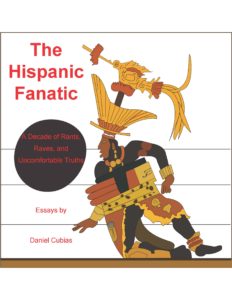
  • The Hispanic Fanatic

  • Copyright © 1996-2010 Hispanic Fanatic. All rights reserved.
    Theme by ACM | Powered by WordPress