Stumped by the bitca

On occasion, the Bitca will interrupt me at work (or more likely, interrupt my own self-imposed interruption of work) to ask me a stray question or make a unique observation or confide her hatred of a co-worker. The other day, she approached me with the earnestness of a Buddhist monk in training, looking like she sought answers to the big questions on life and existence.

“Hey,” she said. “Doesn’t ‘cucaracha’ mean cockroach?”

“Yes,” I said.

“Why would anyone sing about a cockroach? And isn’t it insulting to Mexicans to be associated with cockroaches?”

I had to admit that I had never given the subject much thought. Now that she mentioned it, why would Mexicans be happy that one of their most famous pop-culture contributions refers to a loathsome, disease-carrying insect? As I pondered this, the Bitca went on.

“I hope you know that I asked you that question, not because you’re Hispanic, but because you carry a lot of useless trivia in your head,” she said.

“Of course,” I said.

“I don’t want to be prosecuted for hate crimes.”

“Who does?”

The she punched me on the arm, announced that she had just committed assault after first provoking me with racial hate speech, and stated that the incident should be noted on my blog.

I didn’t want to give her the satisfaction, but she had piqued my curiosity. So I looked into the matter. Five minutes of internet research revealed that “La Cucaracha” has murky origins.

It could have originated as a drinking song, much like the melody for our national anthem (it’s true). The tune may have been a coded reference for drugs (“roach” is slang for marijuana even in the United States), which makes sense when you consider how many oh-so-witty musicians have written odes to that perennial dream girl, Mary Jane. Or the song may have been a political allegory, which is a much deeper genesis than I expected. My favorite theory of this annoying tune’s meaning is that it was a result of “the great Mexican cockroach scare of 1827,” which we can all agree would be an excellent title for a direct-to-DVD horror movie or punk-rock anthem.

In any case, the Bitca has gotten her way again, and we are all just the slightest bit wiser because of it. 


Becoming a Trendsetter

In honor of Mother’s Day, allow me to give a shout out to all the moms across the blogosphere. Let me also take the time to make a plea to those who are considering becoming a mother through adoption.

My request is that you look south. There are plenty of Latino infants for you to choose from.

I know what you’re saying. Hispanic babies have simply not become fashion accessories like African or Asian infants have. This is true.

There are perfectly good orphans in Central America, but the celebrity moms and dads appear to swoop only into places like Vietnam and Mauritania. Can’t they take home just one adorable brown kid to complete their ethnic menagerie? I would think that, at the very least, Angelina Jolie would have snagged a Bolivian child in her relentless quest to form a toddler UN.

But alas, this has not happened, and Guatemala is a perpetual second to China when it comes to Americans going abroad for the offspring needs.

You can change all that. Look past the obvious cuteness of Asian babies. Decline that trip to a Pacific archipelago to see the latest batch of infants.

Instead, grab your husband/wife/partner and say, “Damn it, let’s get a Nicaraguan baby! Today!”

You won’t regret it.


It's Much Prettier in Spanish

As we enter our third month here at the Hispanic Fanatic, it’s clear that we need to get one thing out of the way:

No, I will not teach you how to curse in Spanish.

As we all know, the first thing anyone ever asks to learn in a foreign language is how to insult a total stranger’s parentage in as disgusting a manner as possible. Blasphemy is also hugely popular.

Why is this? Are we looking for some common bond across culture, and the need to offend is prevalent around the world? Or is this just human nature to gravitate toward the basest level of communication? Or is it just more fun to shout, “hijo de puta!” than it is to murmur “como se llama”?

In any case, Spanish is not any more vulgar than English, and the context of the insults are pretty much the same.

If you really want to let someone have it, you have to go with Arabic. Most languages stop at “Fuck you” or perhaps “Fuck your mother.” But an Arab friend once taught me an insult that basically translated to “May you be anally raped by a thousand lunatics and your severed corpse flung into the gutter to be devoured by a hundred rabid hyenas.” Sadly, I have since forgotten how to pronounce this extremely handy phrase. However, with sentiments like that floating around the Middle East, I have a better understanding of why they are so damn tense there.

But again, what taboo are we seeking to transcend when we learn how to say “shit” in a foreign language? Why is it the first thing we ask, instead of “Where’s a restaurant?” or “Can you break a twenty?” or something we might actually use?

Of course, even bringing up this subject is bound to offend some people. To those individuals, I can only offer my earnest apologies and humble expressions of remorse.

And let me just add, in the true spirit of sincerity, that you should go chinga tu madre.


The Number "Five" Appears in Some Context

Cinco de Mayo is here, and I have one simple question for the Anglos out there: What does this day signify? I mean, what historical event does it commemorate besides the advent of the two-for-one margarita special?

I do not mean this to be bitchy or accusatory. I may be playing a subtle game of racial gotcha, it’s true, but what’s wrong with that?

To be fair, I myself never heard of Cinco de Mayo until I was a teenager, which was perhaps a decade before mainstream America started celebrating diversity in sloppy, albeit sincere fashion. This eagerness to let other ethnic groups know that they are almost, very nearly American has lead to people wishing me a “Happy Independence Day” months before July 4. It’s sort of like those school holiday programs, where the Jewish kids get one verse of “The Dreidel Song” in the midst of nineteen Christmas carols.

Again, I appreciate the effort. But for starters, I am not Mexican (Cinco de Mayo is, strictly speaking, only relevant to Mexico). Second, May 5 is not Mexican Independence Day (that would be September 16). And lastly, one listen to my flat, Midwestern accent should let you know that any Latin American holiday has about as much significance to my life as Oktoberfest does to a sixth-generation descendent of German immigrants… actually, maybe even less, because Oktoberfest features beer, which is most tasty.

My chief memory of Cinco de Mayo, in fact, is from 1998, when a ditzy California blonde broadsided my brand-new car. I don’t know why I continue to associate the day with this event, but now it is stuck in my head… Damn.

In any case, Cinco de Mayo will not find me marking the day in any special manner, nor using it to justify guzzling egregious amounts of alcohol. It’s just another evening to me, thank you very much.

But I do not want to leave you without concrete information (news you can use, as it were) in this post, particularly if it will help you break the ice with that cute girl at the end of the bar. So here are some facts about the significance of Cinco de Mayo, which you can mention tonight in between ordering rounds of tequila for that special someone. You can thank me later. 


A point of clarification

I have to thank Keg, both for commenting on my post “I Have Not Been to the Mountain,” and for pointing out an obvious error in my writing.

In that post, I bemoaned the lack of Latino icons. I should have specified, however, that I was talking about the dearth of positive or uplifting leaders. After all, there are plenty of negative Hispanic icons. So I should have been clearer about that.

There’s a larger issue, however, which is that I didn’t make it clear that my focus is on Hispanics in the United States rather than in Latin America. This goes beyond that individual post. Indeed, the whole point of this blog is to discuss Latino life in the United States. If you notice, I spend very little time addressing what takes place in foreign countries (an exception is my post about the Argentinean duende, which still had a tangential relationship to American issues and was just too damn funny to pass on).

So I thank her for forcing me to hone my writing. And while we’re at it, I want to point out that I’m still getting a handle on this blog (now in its third month) and its parameters. Right now, I’m leaning toward emphasizing bigger issues that can be explored in longer posts, or more autobiographical entries that (hopefully) illustrate some larger themes. This means I’ll have fewer conversational posts about fast-breaking issues, but you can get that anywhere (notice that I skipped commenting on this week’s immigration-reform protest marches).

I remain curious about how this blog is developing. Once again, your feedback is always welcome. Well, maybe not always – let’s not get carried away – but feel free to post a reply.

Otherwise, stay tuned for more rants and profanity.


We Can Offer Her Honorary Membership

I don’t follow celebrity gossip, mostly because I’ve never managed to work up interest in the desperate actions of shallow people who make a thousand times more money than I do. My antipathy is also because celebrities so rarely say anything that truly shocks me.

Therefore, it was with great surprise that I ran into this recent quote from singer/songwriter Alicia Keys:

“I’m not Latina, even though I would love to be and many people do think I am.”

She has officially shocked me. The reason is because I’ve never heard of a white or black person who actually wanted to be Hispanic.

Minorities who want to be white are commonplace. The perception that life is easier for members of the majority culture is well-ingrained.

And if there is a second most-coveted ethnicity, we can all agree that it is black. This desire has lead to a surplus of white rappers and a cavalcade of unintentionally hilarious wannabes slouching their way down the street.

Therefore, a beautiful and successful non-Hispanic woman yearning to be a Latina is not something I would have predicted. Such proclamations have the dangerous potential to make us hip.

Because Ms. Keys is a mixture of black and white, people are apparently confused about her race. So nobody will correct her if she claims Hispanic blood. I encourage her to follow her heart on this one.

Let her proclaim an affinity for salsa and a tendency to hug total strangers. Allow her to speak rapidly and refer to distant relations as cousins. And nudge her into swaying her hips to anything remotely rhythmic and becoming subsumed with Catholic guilt.

In this way, she can inch toward achieving that Latina status she so admires.


One Crazy Mexican

Recently, I was introduced to the art of Martin Ramirez. His strange and twisted life story can be summarized as follows:

A young Mexican man comes to the United States in 1925 to find work. Years later, the Great Depression hits, he winds up on the street, and he gets picked up the cops. He is thrown into a nuthouse in California, where he lives for the rest of his life. Over the course of his 32 years in a mental institution, he creates some of the most stunning artwork of the era. With no formal training, and often, without any art supplies beyond stray objects that he found in the building, he creates mesmerizing images that address immigration, poverty, and insanity. He has public exhibitions of his work, and critics hail him as brilliant. Yet his schizophrenia is so severe that he rarely speaks to anyone, and he never comprehends that his pictures have provoked such adoration in the outside world. He dies, still insane as fuck, in 1963 at the age of 68.

If he had been a crazy Brit or a mad German, would his treatment in America have been the same? Might his genius be better recognized and nurtured today, rather than shut off in a padded cell? And what of our social services that took care of an immigrant instead of chucking him back across the border? How would that work in the current political climate?

These are all valid questions, but all I can offer in this post is a gateway to his art. Looking at his work makes you feel like you’re taking a warped train ride (one of his favorite reoccurring motifs) through a tortured imagination, destination unknown or even irrelevant. If you get a chance, check out a Ramirez exhibition, and let the Fanatic know what you think of it.


Grab Your Maracas and Come with Me

My cousin loves the music of Tom Waits. I never saw her more excited on Christmas, in fact, than the year her sister gave her a copy of Big Time as a gift.

My cousin can groove to any tunes she wants to, of course, because she’s a Latina. It’s one of the few times that it’s advantageous to have a fuzzier, less-distinct cultural image.

If she were black, for example, exclaiming an admiration for Frank’s Wild Years would cause perplexity, and possibly outright hostility. Similarly, white people are given wide latitude in what they listen to, but if they get too far into hip-hop it comes across as slumming or co-option or a grotesque absurdity that makes all of us nervous (spare me your exceptions).

But an Hispanic can crank anything and it fits. I have another cousin who admires Johnny Cash, another who blares Ministry, and another who only listens to extended DJ remixes of techno blips and beeps (which are sounds that I’m sure will replace waterboarding as an interrogation technique).

All of it lines up, but none of it does too. So bring on the classic rock or blare some jazz or trip back to disco, because everything is equally representative.

The few Hispanic artists out there don’t present a unified front. I grew up listening to Carlos Santana, but his music is no more or less Latino-centric than Daddy Yankee, who is, of course, quite a bit different stylistically. You can go old-school with Tito Puente or Celia Cruz, but by their very nature, these artists bring up images of foreign lands and warm climates that our ancestors left behind to come to America in the first place.

So there is no music specifically associated with the Hispanic American, like hip-hop with black people or, I don’t know, The Carpenters with white people. But is this such a bad thing?

Truth be told, it’s a relief to have one aspect of life not subjected to the whims of cultural categorization. And if this is one of the few ways in which Hispanics have it easier than other ethnicities, I’ll take it. Plus, it makes it a lot easier to explain the diverse and occasionally embarrassing contents of my ipod, should it ever fall into the wrong hands.

But writing about this got me thinking about Darius Rucker. I always felt bad for the lead singer of Hootie and the Blowfish. It was all over for him, culturally, the moment he strummed an acoustic guitar and began getting all James Taylor on everybody. He became a curiosity, even a freak. That never would have happened if he had wised up and claimed to be a very dark Cuban.


Kill the Messenger

When I lived in Southern California, I resembled most residents in that I spent way too much time on the freeways, to the point where numbers (eg, 405 and 101) became not indicators of specific routes but destinations in and of themselves. The 10 was my endpoint, and the 134 to Pasadena was a state of being.

One evening, I was a passenger in a car driven by an Anglo friend, and we were doing the LA crawl on the bumper-to-bumper freeway. He mentioned that, because there was more than one person in the car, we could work our way over to the carpool lane and zip past the traffic.

As he maneuvered toward this nirvana of speedy access, I smirked and said, “That’s the great thing about being Hispanic in California. I mean, the carpool lane only requires two or more people? Most of us have three times that many just in the front seats.”

He didn’t laugh. And we drove on in silence.


Introducing the BITCA

At my white-collar bastion of normalcy, the day job, one of my filing cabinets is off its hinges. It hangs askew but is otherwise functional. I believe that its aesthetic ugliness is not worth the hassle to get it fixed.

One of my co-workers, however, noticed the damage, provoking her to say, “What is it with you Hispanics? If it’s not cars on blocks on the lawn, it’s busted filing cabinets in the office.”

In light of this observation, I will henceforth refer to this woman as the Bitch In The Cubicle Adjacent, or the BITCA. It forms an acronym so descriptive that it’s almost redundant.

But allow me a moment of clarification and perhaps confession. I don’t really think she’s a bitch. In fact, BITCA is my best friend in the place. But when I told her I was starting a blog, she declared that she would soon insult me in the hopes of snagging a mention on the site. She even told me she wanted to be referred to as a bitch, and she seemed rather overjoyed at the possibility of internet notoriety.

I broke it to her that a plain insult wouldn’t do, because we do that to each other every day and, more important, it wouldn’t relate to the theme of this blog (i.e., Hispanicness, Latinotude, etc.). So she vowed to come up with something racial.

Bear in mind that this is a white woman raised in Montana. My contribution to her cultural awareness so far has been teaching her the phrase “Hola, vato!”

But she followed through on her vow. And she has succeeded in making me write about her, although her insult was strained from the start because I could tell she was just reaching for something inflammatory. It lacked sincerity and vituperation, but it got the job done.

In any case, I will write more about the BITCA in the future. But she can consider herself fully introduced.


  • Calendar

    October 2026
    M T W T F S S
     1234
    567891011
    12131415161718
    19202122232425
    262728293031  
  • Share this Blog

    Bookmark and Share
  • My Books

  • Barrio Imbroglio

  • The Bridge to Pandemonium

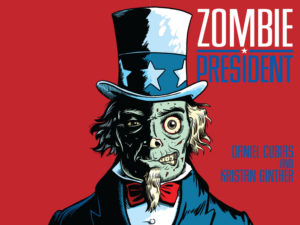
  • Zombie President

  • Feed the Monster Alphabet Soup

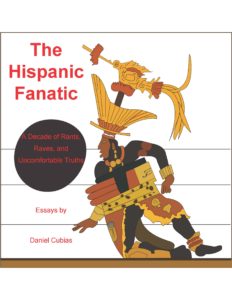
  • The Hispanic Fanatic

  • Copyright © 1996-2010 Hispanic Fanatic. All rights reserved.
    Theme by ACM | Powered by WordPress