Two recent polls caught my attention.
The first was taken at the height of Tebow-mania, when many otherwise rational adults believed that a mediocre quarterback could actually win the Super Bowl.

Two recent polls caught my attention.
The first was taken at the height of Tebow-mania, when many otherwise rational adults believed that a mediocre quarterback could actually win the Super Bowl.
The New York Times recently reported on a small rural town where longtime residents complain about “young Mexican men working construction and driving down wages, the children of laborers flooding crowded schools…and strip clubs springing up on roads that used to be dark and quiet.”
Is the town in Wisconsin, Kansas, Alabama, or even (shudder) Arizona? No, it is “a precolonial Mexican village outside Oaxaca City, filling up with fellow Mexicans.”
It seems that the urge to hate immigrants — even of the same nationality — is universal.

Iraq isn’t our problem anymore. Who cares. Good riddance.
—Internet commentator
USA! USA! USA!
—The same guy, nine years ago.
Future generations will never confuse it with VJ Day. This time, there were no jubilant crowds in Times Square or iconic photographs of sailors kissing nurses or a cross-continental outpouring of relief and exuberance.
Instead, there was a collective shrug as a military convoy rolled through the Iraq desert. The war that began with Shock and Awe ended with Confusion and Indifference.

To continue reading this post, please click here.
If anyone kills a person, the murderer shall be put to death.
The Bible — Numbers 35:30
The dignity of human life must never be taken away, even in the case of someone who has done great evil.
Pope John Paul II
Each of us has, to some degree, an unhealthy capacity for revenge. And that trait flows from us as individuals into society at large. This unflattering characteristic is one of the driving forces behind capital punishment.
As opposed to many political or cultural debates, there is no middle ground in this. You either want to string killers up or you don’t.

In America, you can be anything you want to be, and everybody has unlimited potential…
Well, if that were really true, the entire population would be nothing but rock stars, senators, Oscar-winning actresses, and NFL quarterbacks.

“The U.S. Census Bureau expects racial minorities / people of color to make up a majority of the U.S. population in the next thirty to forty years. Do you feel concerned or hopeful about that?”
The question comes from a survey conducted by the Applied Research Center, which asked Americans their opinions about a well-publicized fact: By 2050, if not sooner, the nation’s combined population of racial and ethnic minorities will outnumber white Americans.

My old neighborhood in New York City has become a bit of a yuppie den. My current neighborhood in Los Angeles is apparently being overrun by hipsters.
Can any of us escape gentrification?
As I wrote recently, Latino neighborhoods have increasingly become gentrified as white people move into what used to be called the barrio. This process is either a solution to urban blight or a desecration of Hispanic culture, depending on whether you’re the gentrifier or the gentrifee (yes, I made those words up, don’t bother to comment on them).

Well, that was close.
A couple of years ago, it looked like the United States was in real economic trouble. But now everything is great… yeah, just great… yup.

You’ve heard of the luck of the Irish. So what is the luck of the Hispanic?
Personally, I think the Latino propensity for serendipity is symbolized by Hugo Reyes, also known as Hurley, from the show Lost.

Despite being a fun-loving, friendly Latino, Hurley kept seeing everybody around him get killed in some random or grisly manner. He constantly bemoaned the fact that he was cursed.
Certainly, many Americans relate to Hurley. For the last decade or so, we’ve all felt jinxed. It’s been a nonstop joyride of economic turmoil, endless war, terrorist threats, and political chaos.
Certainly, one of the great delicacies of the world is the humble pupusa. I’ve written before about my abuela’s technique for making this Salvadoran dish. In the Midwest, where I grew up, the only way to actually get a pupusa was to have an old woman like my grandmother make one for you in her kitchen.
However, now that I live in Los Angeles (and of course, because Hispanics continue to exert a growing influence on American culture), it’s easy to go to a pupuseria and order a dozen of them.
There’s a great place a short walk from our apartment, and my wife and I go there often. Recently, we were picking up dinner when I noticed that they also serve Salvadoran quesadillas.
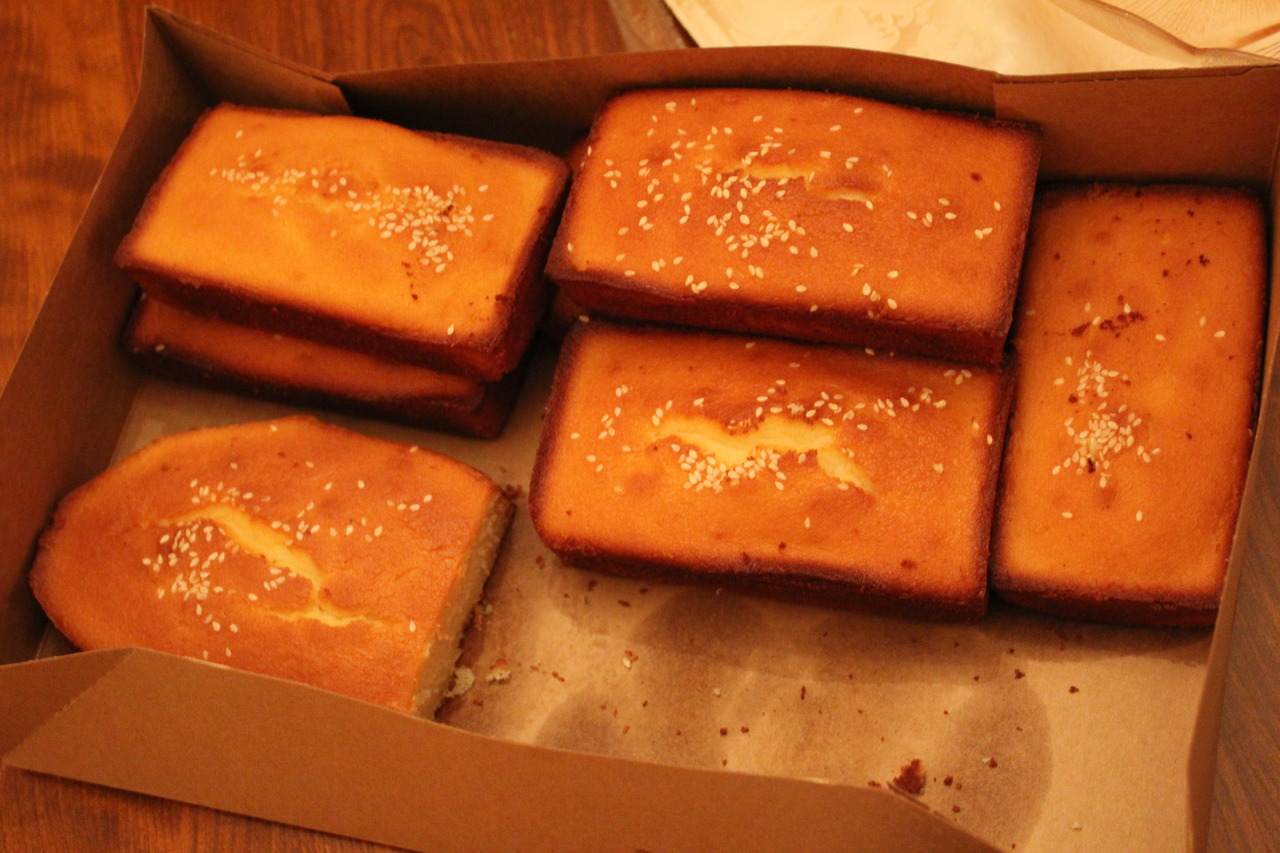
I ordered a slab, and a guy standing in line behind me got very excited.
“Wow!” he said. “They have quesadillas too? I love quesadillas!”
He was clearly talking about Mexican quesadillas.
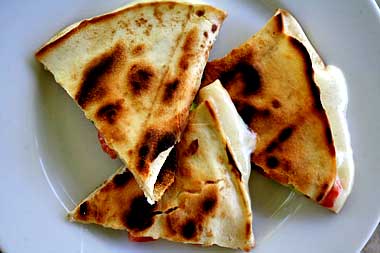
The Salvadoran version is actually a dessert, and very tasty. The more famous Mexican quesadilla is synonymous with bleary-eyed happy hours that feature cheap appetizers based on cheese.
The guy behind me resembled a white-collar worker on a break, and I figured he expected the quesadilla to be a tastier version of something he picked up at TGIFs.
He ordered before I could tell him that there was a substantial difference between the two dishes. It was a golden opportunity to explain how Latino culture is vast, and that each country has its own proud quirks and wacky traditions. I could have went on about how the quesadilla is a metaphor for the differences in Hispanic society, and I may have urged him to avoid making generalizations about Latinos.
But then I figured I would just come across as condescending, and possibly a little bizarre (who discusses abstract food metaphors with total strangers while standing in line?).
So I let him order the quesadilla, knowing that he would be completely perplexed when they presented him with the Salvadoran version.
He was baffled, of course, when he received his order. But then he shrugged and accepted it. With hope, he discovered a new culinary favorite.
In any case, the next time you go to a pupuseria, walk right up to the counter and in a clear, confident voice, announce that you want some quesadilla. When some smug guy interrupts you to say that it’s a dessert, smile and say that you know that already.
Your Salvadoran friends will be impressed.