So I’m driving down the street, with my phone plugged in and playing music on shuffle, when Billy Joel’s “Allentown” comes on. I hadn’t heard the song in years, and I considered hitting “skip,” but I hung in there.
Now, you will not be surprised to learn that I am not a big fan of Billy Joel. Yes, he has some catchy tunes from early in his career, when he had just the slightest bit of an edge (e.g., “Only the Good Die Young” is a head-bopper about trying to bang a goody-two-shoes Catholic girl).
But a lot of his stuff consists of maudlin takes on smooth jazz. Plus, there is “We Didn’t Start the Fire,” which is second only to “American Pie” as the most insufferable Baby Boomer nostalgia song of all time.
Having said that, “Allentown” has a hooky melody, and it’s an anomaly for a Joel song because it is not about love or Long Island or marrying a supermodel. It’s about the factory workers of the Pennsylvania city of the title.
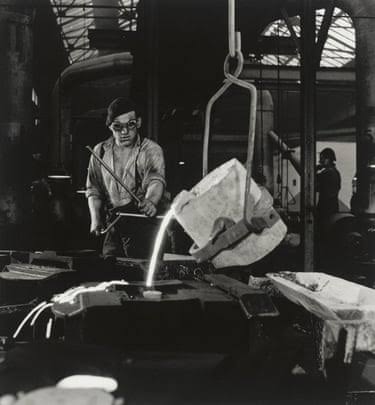
The song is from 1982. So we’ve been singing about the plight of factory workers for over 40 years.
Does any other demographic get the kind of sustained adulation and deep concern that blue-collar (usually white) Americans receive?
Hey, when was the last time you heard a catchy pop song about female travel agents who went out of business because of the internet? No, it’s only tough guys who work in steel mills or coal mines that make us weep patriotic tears (and enact protectionist legislation).
Assuming that the post-war factory boom started in the late1940s, the song implies that it was over by the early 1980s. This means blue-collar America has been in decline longer than it was ascendant. This further implies that blue-collar prosperity, which is one of the pillars of the conservative movement, was not a longstanding feature of American values. It was a fucking blip on the cultural radar.
Getting back to the song, the part where Billy Joel sings, “They shoved an American flag in our face” has to be the most punk rock lyric the Piano Man has ever penned. And again, this was during Reagan’s America, which was supposedly a golden age for blue-collar American men. Everything was great!… except for all those factories closing down, which was so prevalent that hit pop songs played on the radio about how shitty it was for these workers.
Ultimately, “Allentown” is telling us that all that mythologizing, all that insisting that manual labor has always been the key to freedom, is not true. In reality, factory workers have been bitching about their plight for decades, even through multiple economic booms.
I repeat, this song is from 1982.
The situation for blue-collar workers hasn’t gotten better in generations and is unlikely to abruptly become magical. Just consider that under an administration that guaranteed that it was bringing factories back, American manufacturing has gone backwards and lost over 100,000 jobs.
If it makes these workers feel any better, white-collar workers will soon become enmeshed in this state of perpetual malaise. For proof, look at the fact that U.S. corporate profits recently hit a record high, while labor’s share of economic output has dropped to a record low.
That means everybody who is not a billionaire is getting poorer. And what is the response of the super-wealthy to the economic pummeling that the middle and lower classes are enduring?
Well, they look at how the system benefits them, and they quote Billy Joel:
“Don’t go changing.”