My abuela is past 90 and shows no signs of ill health. I wonder if she will visit me in the retirement home, because I will end up in one of those places long before she does.
I mention this because more Americans are entering “the sandwich generation,” where they raise their kids while taking care of their aging parents. It’s a common scenario, and the premise for at least a couple of failed sitcoms.
Indeed, in post-recession America, multiple generations under one roof is not uncommon. And for Latinos, economic necessity and strong familial bonds increase the odds that individuals will one day have to take care of their parents. But that scenario doesn’t seem to faze us.
In fact, more than 90% of Hispanics say providing assistance to elderly loved ones will be a positive experience, a higher number than the general population. And while more than half of all caregivers to the elderly report being stressed about the situation, only one-third of Latinos who care for an older person say that it has caused stress.
Yes, as I’ve written before, putting one’s aging parents in a retirement home is unthinkable for many Hispanics. Latino culture is strongly focused on the family, and it is often assumed that elderly parents will eventually go live with their adult children. As one Latina writer puts it, “We open our doors and bring [elderly parents] home, we care for them, and we do not set them aside like a piece of old furniture.”
Of course, that’s a little harsh on all you non-Latinos who plan to stuff mom and dad in one of those old folks’ homes at some point. But it is — how can I put this? — pretty much damn true.
Now, there is a dark side to this. Perhaps because Latinos often presume that elderly parents will eventually go live with their adult children, just 10% of Latinos report that they have done much planning for their long-term care.
So when madre or padre does move in, stresses such as overcrowding and conflicting needs can pile up. Still, we seem to be handling it well so far.
As for my abuela, thus far she has not had to move in with any of her kids (or more likely, her grandkids). She lives by herself, where she cooks, watches TV, and reminisces about the past.
But I bet she’s also plotting how to spend the inheritances she will get, considering she will outlive all of us.


More to the Story
Recently, I wrote about the dismal publishing scene for Latino authors. Well, I was remiss in at least one aspect. I implied that Hispanic writers are limited only to pitching the big New York publishing houses or jumping into the self-publishing quagmire. There is another option.
Namely, it is the world of small presses. Now, in the past, the phrase “small press” invoked images of ink-stained loners cranking out bizarre manifestos. Well, you’ll be glad to know those guys have moved on to troll internet comment pages across the web.
The small presses that exist today are often professionally run, highly principled organizations that focus on marginalized or experimental writers. And when it comes to Latino authors, we may be entering a golden age.
I’m talking about presses like Arte Publico, Floricanto, and Editorial Trance, all of which have been doing great work for years. And there is also Aignos Publishing, co-founded by Jonathan Marcantoni and Zachary Oliver.
Marcantoni says that Aignos, and other small presses that have a similar focus, look for writers who push boundaries and challenge readers to question their worldviews. Authors who embrace their distinct cultures — something Latino writers are well-known for doing — may find a home at Aignos or a similar small press.
“A small press gives authors the legitimacy of being affiliated with a company, one that is taken seriously by media and festivals and awards, in a way writers never get as self-published authors,” Marcantoni says. “Well-established small presses have marketing plans and publicists, plus the distribution channels are on par with what large presses use.”
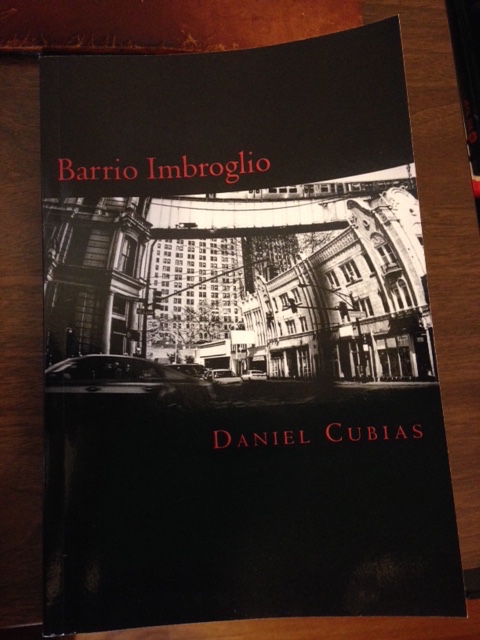
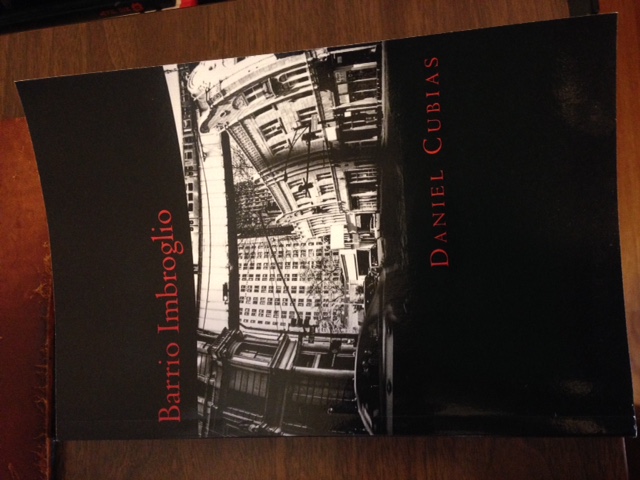
Indeed, I can speak to this issue, as my own self-published novel, Barrio Imbroglio, is selling somewhere between hot cakes and lukewarm waffles.
It would certainly help to have an established marketing team behind me (my current marketing team consists of me and my cats).
Marcantoni says that when it comes to small presses, “the Latino author gets the best of both worlds: world-class distribution, a company backing their efforts, and creative freedom.”
That combo often leads to great books. For example, Aignos recently published Nuno, by Carlos Aleman. The novel is a lyrical love story set in pre-Castro Cuba and the aftermath of the revolution. Marcantoni says that Nuno doesn’t fit into mainstream expectations of Latino literature. As such, it lines up with Aignos’ mission of pushing writers to develop their views and skills instead of pressuring them to make the bestseller lists.
“No one should be a writer to be famous,” Marcantoni says. “It should come from a desire to express yourself and touch the lives of others.
So will we see more Hispanic authors telling their unique stories via small presses, touching the lives of more and more readers? Well, there’s ample reason to be optimistic about such a future.
“The Latino community can stand out as one of artists seeking to raise the bar of what storytelling can be,” Marcantoni says. “And there are publishers out there who will support you.”